
The strongest masonry projects begin before a product is selected. These seven conversations can help homeowners and project professionals make more confident decisions about design, installation, cost, timing, and long-term value.
A masonry selection often begins with something as simple as a saved photograph.
A homeowner notices a warm, lightly weathered brick on one house, a pale limestone on another, and a dramatic fireplace wall in a third. Each image is appealing. Each suggests a possible direction.
But each also belongs to a different project.
The brick sits beneath another roofline. The stone was installed at another scale. The fireplace was designed around another room, firebox, venting path, and finish package.
That does not make the inspiration less useful. It simply means that the material cannot be separated from the project around it.
Learning how to choose masonry materials is less about finding one perfect sample than understanding what the material needs to accomplish.
Where will it be used? What must it coordinate with? How will it be installed? What will the complete project cost? When must it arrive? How should it look and perform years from now?
Those questions are best answered before a product is finalized.
At Clay Structures, we see how much smoother the selection process can become when homeowners, builders, architects, designers, masons, and fireplace professionals begin with the project rather than the product.
The goal is not to make every decision at once. It is to bring the right people into the conversation early enough that each decision supports the next.
The key takeaway
Before choosing brick, stone, or a fireplace, clarify the project vision, application, surrounding materials, installation requirements, total installed investment, schedule, and long-term expectations. Better selections begin with better conversations.
In this guide
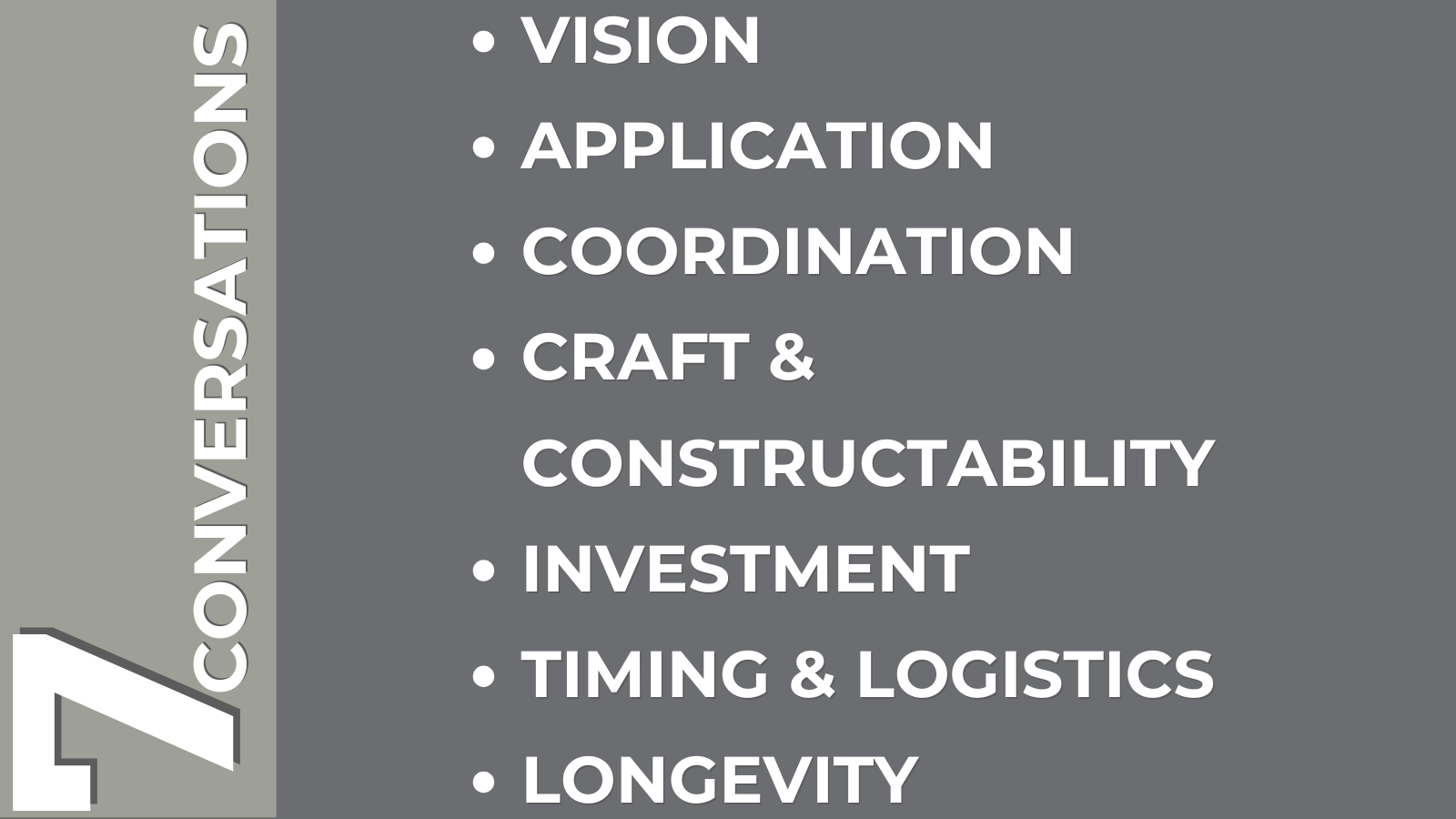
- The seven conversations at a glance
- 1. Vision
- 2. Application
- 3. Coordination
- 4. Craft and constructibility
- 5. Investment
- 6. Timing and logistics
- 7. Longevity
- Who should be involved
- What to bring
- Frequently asked questions
The Seven Conversations at a Glance
Conversation 1: What Are You Trying to Create?
The first conversation is not about red versus white brick, natural versus manufactured stone, or traditional versus linear fireplaces.
It is about intent.
What should the finished project feel like?
Perhaps the goal is a home with a quiet sense of permanence. Perhaps it is a lighter, more contemporary exterior with restrained texture. Perhaps the fireplace should be the room’s focal point—or perhaps it should sit comfortably within the architecture without dominating it.
These are design questions, but they do not require design vocabulary. Homeowners can begin with ordinary language:
- Warm or crisp?
- Refined or rustic?
- Subtle or expressive?
- Traditional, transitional, contemporary, or something less defined?
- Should the masonry lead the design or support other materials?
It also helps to look for patterns among inspiration images.
A collection that initially seems varied may share a preference for soft contrast, larger-scale stone, low-variation brick, muted colors, or simple detailing. Those common characteristics are often more useful than trying to reproduce one photograph exactly.
Plans and elevations add another layer of clarity.
A brick that feels balanced on a smaller facade may read differently across a large wall. A highly textured stone may be beautiful at an entry but visually heavy when used across an entire exterior. A fireplace surround that looks proportional in a tall room may overwhelm a smaller wall.
The purpose of this conversation is not to limit the possibilities. It is to give them direction.
A question worth asking
What should someone notice first—and what should quietly support it?
Conversation 2: Where Will the Material Be Used—and What Must It Do?
Once the vision is clear, the next conversation is about application.
Brick, stone, and fireplace finishes are not selected only for appearance. Where and how a material will be used affects which products, systems, and installation approaches may be appropriate.
An exterior wall, interior accent wall, chimney, landscape feature, fireplace surround, hearth, and outdoor living area each place different demands on a material.
Exposure to weather, water, heat, foot traffic, soil, or changing temperatures may matter. So may the wall assembly, substrate, structural support, thickness, attachment method, and transitions to adjacent materials.
This is especially important with stone. “Stone” can describe natural or manufactured products, full-depth or thin veneer, many profiles, and several installation systems. Products that appear similar in a photograph may create very different project requirements.
Clay Structures offers a range of natural, manufactured, and thin-stone options for interior and exterior applications. The right place to begin is not with the broadest possible selection, but with a clear understanding of the application.
The same principle applies to brick sizes, colors, textures, reclaimed products, and veneer options. Before narrowing the visual choices, clarify where the brick will be used and how it will become part of the complete wall or design.
Fireplace Planning Begins Before the Finish
Fireplace planning introduces another layer of coordination.
The visible brick or stone surround may be one of the most exciting choices, but it usually should not be the first one.
The project team may first need to clarify:
- Is the fireplace wood-burning, gas, electric, masonry, or factory-built?
- Is its primary purpose heat, ambiance, outdoor use, or a combination?
- Where will it sit within the room or exterior plan?
- What type of venting, chimney, or chase is required?
- What framing, clearance, hearth, mantel, and finish-thickness requirements apply?
- Will a television, cabinetry, shelving, artwork, or another finish share the wall?
Those decisions may influence which finish materials are appropriate and when they should be selected.
The specific fireplace model, manufacturer instructions, qualified installer, builder or designer, and applicable local requirements should guide the technical decisions. The material conversation should support that work rather than compete with it.
Clay Structures’ fireplace and outdoor product options can be evaluated more effectively once the system, location, and project requirements are understood.
The right question is not simply:
Can this material go here?
It is:
Is this material, system, and installation approach appropriate for this exact location and the way the project will be built?
Conversation 3: What Else Must the Selection Work With?
A material rarely succeeds by itself.
It succeeds in relationship to everything around it.
On an exterior, that may include:
- Roof material and color.
- Siding or stucco.
- Trim.
- Windows and doors.
- Gutters and flashing.
- Chimney caps.
- Exterior metals.
- Hardscape.
- Landscaping.
Inside, a fireplace may need to relate to flooring, cabinetry, wall color, wood tones, metal finishes, furniture, and the proportions of the room.
The goal is not to make every material match. Trying to match everything too closely can flatten a design.
The goal is to create a clear hierarchy and a palette that feels intentional.
For homes with a masonry chimney, choosing the right chimney cap is also part of the coordination conversation. Its shape, material, finish, roofline, and relationship to the brick or stone can affect the finished exterior.
Begin With What Is Already Fixed
Start with the elements that are already selected or difficult to change.
On a remodel, that might be the existing roof, windows, flooring, or masonry that will remain. On a new home, it might be the architectural style, roof selection, window color, or a prominent interior finish.
Then decide which material should carry the most visual weight.
If brick is intended to be the defining exterior material, stone may need to support it rather than compete with it. If the fireplace is the focal point of the room, the surrounding finishes may need to become quieter.
Whenever possible, compare materials together rather than one at a time.
Place the brick or stone near the roof sample, trim color, metal finish, flooring, cabinetry, or paint selection it must work with. Look at the group from several feet away. View it in natural light and, when possible, at different times of day.
Then ask:
- Is one material competing with another?
- Are there too many strong textures?
- Does the palette feel warmer or cooler than intended?
- Are transitions between materials clear?
- Will the design still feel balanced across the full elevation or room?
A coordinated project does not require every selection to share an identical undertone.
It requires each selection to understand its role.
Do Not Treat Mortar as an Afterthought
Mortar belongs in the coordination conversation, too.
It is not merely the material between the brick or stone. Mortar color, joint profile, consistency, and workmanship influence how much contrast, pattern, texture, and variation the eye sees.
A mortar that closely relates to the masonry may create a quieter, more unified field. A contrasting mortar may make individual units, patterns, and joints more visible.
Appearance is only one consideration. The appropriate mortar must also suit the material, application, exposure, and project requirements.
The visual decision should therefore be coordinated with the mason and project team rather than made in isolation.
Conversation 4: How Will the Design Actually Be Built?
A brick sample is not a brick wall.
A loose piece of stone is not a completed stone installation.
A fireplace photograph is not a finished firebox, hearth, surround, mantel, chimney, and venting system.
The final result is shaped by craftsmanship.
For brick, the appearance may be influenced by:
- Unit size.
- Color range.
- Texture.
- Bond pattern.
- Mortar color.
- Joint profile.
- Blending.
- Cuts.
- Openings.
- Corners.
- Cleaning and final workmanship.
For stone, the result may be influenced by the profile, scale, pattern, corner treatment, joint width, color distribution, trimming, and the installer’s interpretation of the desired look.
That is why the mason or installer should be part of the conversation before the design becomes difficult or expensive to change.
A productive discussion may include:
- The intended pattern or installation style.
- How colors and sizes will be blended.
- How inside and outside corners will be handled.
- What happens around windows, doors, arches, shelves, and transitions.
- Whether special shapes, sills, caps, lintels, hearth pieces, or accessories are needed.
- Whether the material works with the substrate and wall assembly.
- Whether a sample panel or mockup would help establish expectations.
When a Sample Panel Is Worth Considering
A sample panel can be especially valuable on custom residential and commercial work.
It allows the team to see the material as an assembly rather than as a loose sample. It can demonstrate the range, texture, bond or pattern, mortar, joints, blending, workmanship, and overall character of the finished installation.
A more developed mockup may also show how masonry relates to windows, doors, trim, flashing, and adjacent cladding.
This is not about second-guessing the craftsperson.
It is about making the design intent clear enough that the craftsperson can execute it well.
The material creates the possibilities. The mason’s work brings those possibilities into the finished project.
PLAN BEFORE YOU SELECT
Bring better questions to the next conversation.
Use the Masonry Planning Guide to organize your project vision, application, surrounding materials, team contacts, investment questions, and schedule before your next showroom or design meeting.
Explore Masonry Planning Resources
Conversation 5: What Is the Real Installed Investment?
A price per brick, square foot, or unit can be useful.
But it does not tell the whole financial story.
The total installed investment may include:
- The masonry material.
- Mortar, adhesives, flashing, anchors, supports, and accessories.
- Special shapes, corners, caps, sills, hearths, or trim pieces.
- Freight and delivery.
- Waste and overage.
- Labor and installation complexity.
- Scaffolding, equipment, access, and jobsite conditions.
- Substrate preparation or structural support.
- Fireplace components, venting, chimney elements, and installation.
- Cleaning, sealing, or maintenance where appropriate.
Two products with similar material prices can create different installed costs.
A material with a lower unit price may require more labor, more cuts, more waste, or additional support. A higher-priced material may be used strategically in a smaller area to create the desired effect without controlling the entire project budget.
This is where early value engineering is most useful.
Preserve the Design Intent
Good value engineering does not begin by removing everything distinctive.
It begins by identifying what matters most.
If a particular stone creates the character of the entry, perhaps it can be concentrated there. If the preferred brick exceeds the original allowance, another size, blend, or related product may preserve the design direction. If a fireplace wall is becoming too complex, its detailing may be simplified without making the room feel unfinished.
A candid investment conversation gives the materials advisor, builder, designer, and mason room to explore those options before the decision becomes urgent.
A question worth asking
Which parts of the design are essential—and where do we have room to adjust?
Conversation 6: What Does the Project Schedule Require?
Material selection is also a scheduling decision.
Before masonry reaches the jobsite, the project may need time for:
- Design review.
- Samples.
- Pricing.
- Quantity calculations.
- Approvals.
- Ordering.
- Production or sourcing.
- Freight.
- Delivery coordination.
- Storage.
- Installation.
Some products may be readily available. Others may require longer lead times, special production, quarry coordination, custom fabrication, or a particular order quantity.
That does not mean every selection must be made during the first meeting.
It means the team should understand which decisions affect the project schedule.
Ask the builder, mason, fireplace professional, and materials partner:
- When does the selection need to be approved?
- When will a reliable takeoff or quantity estimate be available?
- What is the product’s current availability or lead time?
- Are special shapes, corners, accessories, or custom pieces required?
- When must the fireplace system be selected for framing, venting, or rough-in work?
- Where can the material be delivered and stored?
- Is the jobsite ready for delivery access?
- Who will confirm quantities, timing, and receiving details?
Early planning also creates room for alternatives.
When the team discovers an availability issue months before installation, it can evaluate another option thoughtfully. When the same issue appears days before the mason is scheduled, the selection is more likely to become a compromise.
A beautiful material only moves the project forward when it is selected, approved, ordered, delivered, and ready when the work begins.
Conversation 7: How Should It Look and Perform Years From Now?
The final conversation looks beyond move-in day.
Masonry materials are often selected because they bring a sense of permanence. That makes it worth considering not only how the project will photograph when it is new, but how it should age, weather, and serve the people who live with it.
Think about:
- The level of maintenance the owner is comfortable with.
- The material’s suitability for the exposure and application.
- How natural color and texture variation will read across a large area.
- Whether the design feels connected to the architecture or overly tied to a short-lived trend.
- How repairs, additions, or future matching might be handled.
- Whether the owner wants the material to remain visually consistent or develop more character over time.
- What long-term value means for this particular project.
Long-term value is not limited to resale.
It includes confidence that the material was selected for the right application, satisfaction in living with a well-composed design, fewer disruptions from avoidable changes, and pride in work executed with care.
Brick is often considered for its combination of permanence, design flexibility, and limited ongoing finish maintenance. For a closer look at that part of the decision, read Why Brick Durability Matters When Building a Home.
Stone can also provide enduring character and performance, but the specific product and installation must suit the intended use and conditions.
Fireplace systems have their own operation, inspection, and maintenance requirements, which should be understood alongside the design and installation decisions.
The larger principle is the same across all three:
Choose for the finished project—not only for the first impression.
Who Should Be Part of the Conversation?
Not every project requires every person to attend the same meeting.
But each perspective should enter the process at the right time.
|
Project partner |
The perspective they bring |
|---|---|
|
Homeowner or owner |
Priorities, lifestyle, taste, budget, maintenance expectations, and long-term goals |
|
Architect or designer |
Design intent, proportion, material hierarchy, documentation, and coordination |
|
Builder or remodeler |
Scope, construction sequence, trades, investment, site conditions, and schedule |
|
Mason or installer |
Workmanship, installation method, pattern, detailing, substrate, quantities, and constructability |
|
Fireplace professional |
System type, placement, venting, clearances, framing, components, and installation requirements |
|
Masonry materials partner |
Product knowledge, comparisons, samples, availability, quantities, lead times, and practical selection guidance |
The masonry materials partner does not replace the architect, builder, mason, engineer, or fireplace installer.
The value comes from helping the team connect design ideas with real products, applications, quantities, timing, and project conditions.
Clay Structures provides product education, design assistance, estimates, brick and stone tape-offs, delivery, fireplace installation, and guidance intended to help customers compare options more confidently. Learn more about how Clay Structures supports masonry projects and explore the company’s brick, stone, masonry, and fireplace manufacturers.
The earlier those perspectives are coordinated, the less likely it is that one late decision will force several others to change.
What to Bring to an Early Materials Conversation
You do not need to arrive with every answer.
The purpose of an early conversation is to identify what is known, what remains flexible, and what needs to be resolved next.
Bring whatever is available:
- Plans, elevations, sketches, or renderings.
- Photographs of the site, existing home, fireplace, or materials that will remain.
- Inspiration images, including examples you like and examples you do not.
- Roof, siding, trim, window, flooring, cabinetry, paint, or metal samples.
- Approximate measurements and intended material locations.
- Known fireplace type, model, fuel, placement, or installer information.
- Builder, designer, mason, or contractor contact information.
- General budget parameters or allowances.
- The project schedule and target installation date.
- Any concerns already raised by the project team.
A good advisor can work with incomplete information.
What matters is being clear about which details are confirmed and which are still assumptions.
TURN THE CHECKLIST INTO A WORKING PLAN
Organize the decisions before they become deadlines.
The Masonry Planning Guide gives homeowners and project teams one place to record project goals, fixed selections, application details, team contacts, investment questions, and timing requirements.
Explore Masonry Planning Resources
Questions Homeowners Ask Before Choosing Masonry Materials
When should masonry materials be selected during a new home build?
Begin the conversation once the plans and general design direction are developed enough to understand where masonry will be used.
The precise timing varies by project, but selections should be coordinated before they affect wall assemblies, structural support, fireplace framing, finish transitions, pricing, lead times, or the mason’s schedule.
Starting early does not require the homeowner to finalize a product prematurely. It creates time to compare options and resolve dependencies before ordering.
What should I bring to a brick and stone showroom?
Bring plans or elevations, current project photographs, inspiration images, and any fixed exterior or interior selections.
Roof, trim, window, flooring, cabinet, paint, and metal samples can be especially helpful. Also bring approximate measurements, budget information, the project schedule, and any known fireplace or installation details.
The more context an advisor can see, the more useful the material comparison will be.
Should the mason be involved before brick or stone is finalized?
Yes—particularly when the project includes special patterns, unusual transitions, multiple materials, custom details, thin veneer, large-format stone, arches, fireplaces, or a specific joint treatment.
The mason can explain how the design will be executed and identify details that affect labor, waste, support, quantities, and appearance.
Early involvement helps align the selected material with the intended craftsmanship.
How does mortar color affect the appearance of brick?
Mortar can make brickwork appear more blended, contrasted, lighter, darker, busier, or more uniform. The joint profile and workmanship also influence how light and shadow move across the wall.
Because mortar has both visual and performance roles, color should be evaluated with the actual brick while the project professionals confirm the appropriate mortar and application.
Should the fireplace be selected before the brick or stone surround?
In most projects, the fireplace system and its major installation requirements should be clarified before the finish is finalized.
Fuel type, firebox dimensions, venting or chimney, clearances, framing, hearth, mantel, heat management, finish thickness, and nearby televisions or cabinetry can affect the design.
The fireplace professional, builder, and finish-material advisor should coordinate those decisions rather than treating the surround as an independent selection.
Is the masonry material price the same as the installed project cost?
No.
Installed cost can include material, freight, mortar or adhesive, accessories, supports, special shapes, waste, labor, equipment, access, substrate preparation, and other project-specific requirements.
Compare complete scopes rather than isolated unit prices. This provides a more accurate picture of the investment and creates better opportunities to adjust the project without losing its design intent.
How do I coordinate brick or stone with the rest of the house?
Start with the elements that are fixed or most visually dominant.
Compare masonry with the roof, siding or stucco, trim, windows, doors, metals, flooring, cabinetry, and surrounding landscape as applicable. Look at materials together in natural light and from a distance.
Aim for a clear hierarchy rather than an exact match. One material may lead, while the others provide contrast, continuity, or support.
Start With the Project—Then Select the Material
The strongest masonry projects are rarely the result of one perfect sample chosen in isolation.
They are the result of:
- A clear vision.
- An appropriate application.
- Thoughtful coordination.
- Skilled craftsmanship.
- An honest investment conversation.
- A workable schedule.
- A long-term point of view.
They take shape through conversations among the people who understand the design, construction, material, and way the finished space will be used.
That is the value of starting early.
Before asking, “Which brick, stone, or fireplace should I choose?” begin with a better question:
What does this project need in order to look right, work well, and last?
If a fireplace is part of the project, use the Fireplace Inspiration Gallery to compare visual directions, save up to three favorites, and share a focused shortlist with Clay Structures.
READY TO MOVE THE PROJECT FORWARD?
Bring the project—not just a product request.
Bring your plans, photographs, inspiration, existing selections, questions, and project timing to Clay Structures. Our team can help you compare options, understand the decisions connected to each selection, and identify the next conversation that needs to happen.